
Acne Scars vs Acne Marks:
What’s the Difference?
Not every spot left behind by a pimple is the same. Some fade on their own — others change the texture of your skin permanently. Here’s how to tell them apart, and what to do about each.
Colour Change or Texture Change?
After acne clears, it is common to notice red, pink, brown, or dark spots on the skin. Sometimes, however, acne can leave behind changes in skin texture, such as dents or raised areas.
Although acne marks and acne scars are often used interchangeably, they are not the same. Acne marks mainly involve changes in skin colour, while acne scars involve a change in the texture or structure of the skin.
Understanding the difference is important because the right approach depends on whether you are dealing with post-acne marks, acne scars, or ongoing breakouts.
If you are still developing new pimples, understanding the types, causes, treatment and prevention of acne can help you understand why breakouts occur and how they can be managed.
What Are Acne Marks?
Acne marks are changes in skin colour that remain after an acne lesion heals. They may appear red, pink, brown, or dark depending on your skin type, the severity of inflammation, and how your skin responds during healing.
Acne marks generally do not change the actual texture of the skin. They can gradually become less noticeable over time, although some may persist for longer and may benefit from targeted dermatological treatment.
Common examples include:
- Red or pink marks left after inflammatory acne
- Brown or dark spots after a healed pimple
- Post-acne pigmentation
- Uneven skin tone following breakouts
What Are Acne Scars?
Acne scars are different because they involve a change in the structure or texture of the skin.
They can develop when significant inflammation from acne damages deeper layers of the skin during the healing process. Unlike many acne marks, scars may not disappear on their own and can remain visible for a long time.
Acne scars may appear as:
- Depressed or indented areas
- Uneven skin texture
- Small deep pits
- Wider depressions
- Raised areas of scar tissue
The type and severity of scarring can vary from person to person.
Acne Marks vs Acne Scars — What They Look Like
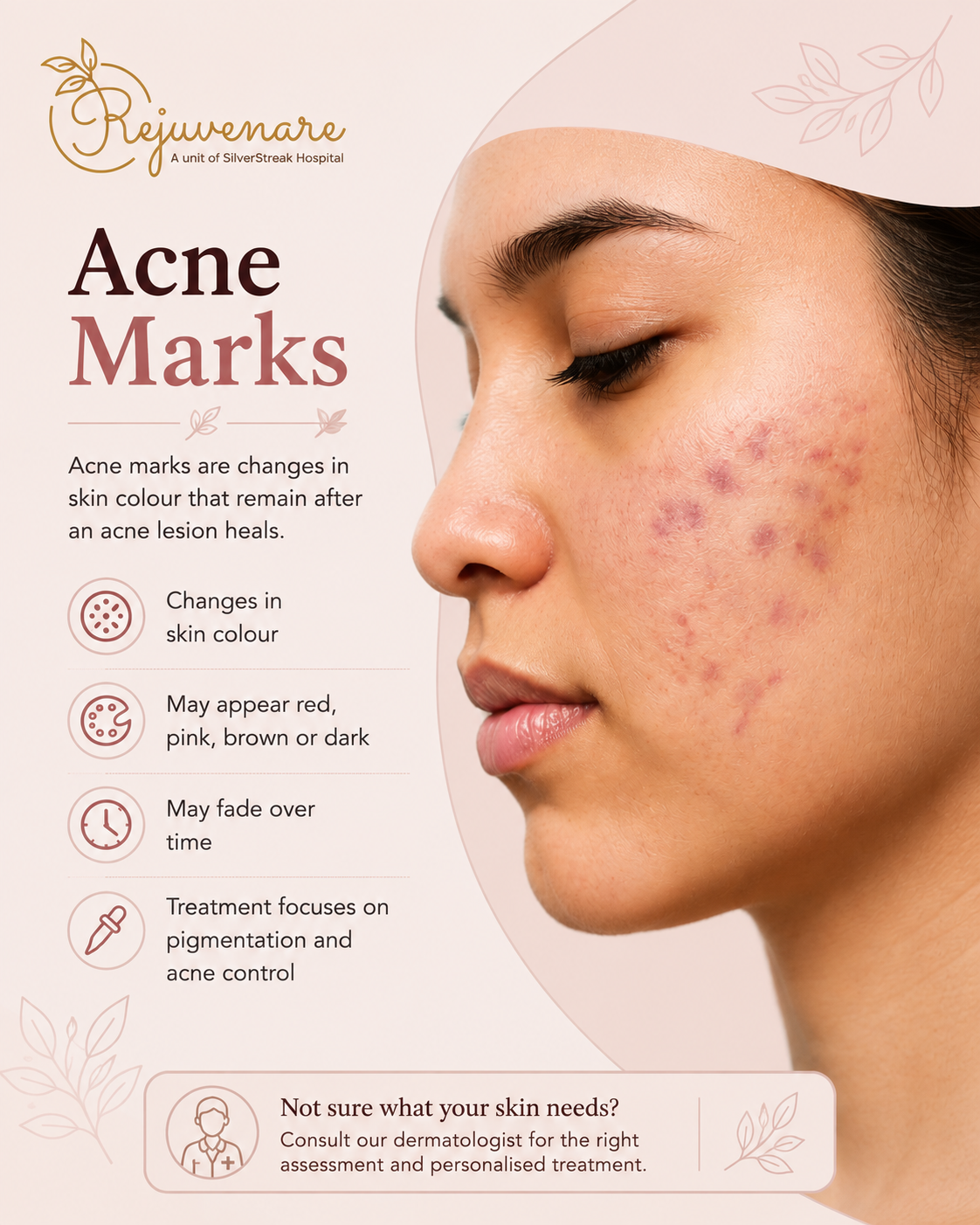
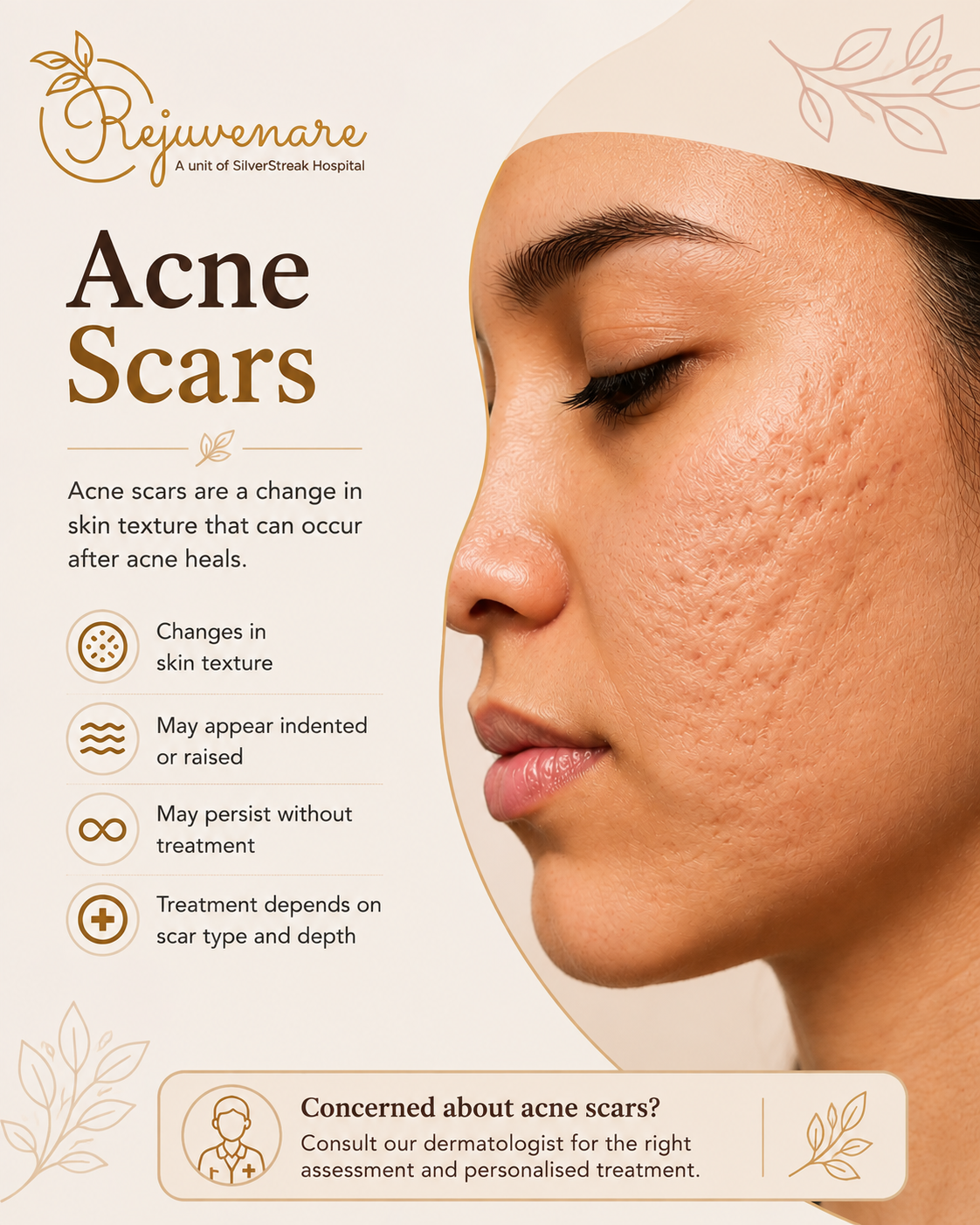
Common Acne Scar Types
Ice-Pick Scars
Narrow, deep scars that extend into the skin and can appear as small, deep openings.
Boxcar Scars
Broader depressions with more defined edges. They can vary in depth and may be more noticeable when light falls across the skin.
Rolling Scars
Create an uneven, wavy appearance because of changes beneath the skin’s surface.
Raised Scars
Occur when excess scar tissue develops during healing, rising above the surrounding skin rather than dipping below it.
Why Does Acne Cause Scarring?
Not everyone with acne develops scars. The risk can increase with deep, painful, inflammatory acne, delayed treatment, and repeated picking or squeezing of pimples.
The longer active inflammation continues, the greater the opportunity for deeper skin damage.
Acne Marks vs Acne Scars
| Acne Marks | Acne Scars |
|---|---|
| Mainly involve changes in skin colour | Involve changes in skin texture or structure |
| May appear red, pink, brown or dark | May appear indented or raised |
| Usually do not alter the skin’s texture | Can create uneven or altered skin texture |
| May gradually become less noticeable | May persist without targeted treatment |
| Treatment focuses on pigmentation and acne control | Treatment depends on scar type, depth and skin condition |
How Can You Tell If You Have Acne Marks or Scars?
A simple way to think about the difference is to look at colour versus texture.
If the area is flat but has a different colour from the surrounding skin, it may be an acne mark.
If you can see or feel a depression, pit, raised area, or uneven texture, it may be an acne scar.
However, some people can have both acne marks and scars at the same time. A dermatologist can assess the skin and determine what type of post-acne concern is present.
Can Acne Marks and Scars Be Treated?
Yes, but treatment depends on what you actually have.
Acne marks and acne scars are different concerns and may require different treatment approaches. Treatment may also depend on your skin type, the severity of the concern, whether you still have active acne, and how your skin responds to treatment.
If you are dealing with ongoing breakouts as well as post-acne concerns, professional acne treatment can help address active acne before focusing on the remaining marks or scars.
A dermatologist can assess your skin and recommend an appropriate treatment plan rather than treating every post-acne spot in the same way.
Why Should Active Acne Be Treated First?
If you continue to develop new breakouts, ongoing inflammation can contribute to additional acne marks and potentially increase the risk of scarring.
For this reason, controlling active acne is an important part of managing post-acne concerns.
Once new breakouts are better controlled, a dermatologist can assess the remaining pigmentation, marks, or scars and determine whether additional treatment is appropriate.
For a broader understanding of acne and its management, read our guide to acne types, causes, treatment and prevention.
Should You Pop Pimples?
It is best to avoid squeezing, picking, or repeatedly touching acne.
Manipulating a pimple can increase inflammation and may damage the surrounding skin. This can increase the likelihood of developing a persistent mark and may contribute to scarring, particularly when the acne is deep or inflamed.
Instead of trying to remove pimples manually, consider professional acne treatment if breakouts are persistent, painful, or leaving repeated marks.
When Should You See a Dermatologist?
- You have persistent dark or red acne marks.
- You have depressed or raised acne scars.
- You have recurring painful or inflammatory acne.
- You continue to develop new breakouts despite skincare.
- You are unsure whether you have acne marks or acne scars.
- Your acne or post-acne concerns are affecting your confidence.
- You want a personalized treatment plan for your skin.
Early assessment can be particularly useful when acne is recurring or becoming more inflammatory, because controlling active acne can help reduce the risk of additional post-acne concerns.
Acne Scar Assessment at Rejuvenare Dermatology
At Rejuvenare Dermatology, Gurugram, acne and post-acne concerns can be assessed according to the individual’s skin condition, acne activity, and the type of marks or scars present. The first step is understanding whether you are dealing primarily with active acne, post-acne pigmentation, textural acne scars, or a combination of these concerns.
- Sector-87, SilverStreak Multispecialty Hospital, Near Sapphire 90 Mall, Gurugram
- Call or WhatsApp: +91 92540 72619
For acne treatment at Rejuvenare Dermatology, a dermatologist can assess your breakouts and help determine an appropriate treatment approach.
For a broader understanding of acne, including its different types, causes, treatment and prevention, explore our guide to acne types, causes, treatment and prevention.
Colour Fades. Texture Needs a Plan.
Acne marks and acne scars may look similar at first, but they are different skin concerns.
Acne marks mainly affect skin colour, while acne scars affect skin texture or structure. Marks may gradually become less noticeable, whereas scars can persist and may require targeted treatment.
If you are experiencing active acne along with persistent marks or scars, treating the underlying acne is an important first step. A dermatologist can assess your skin and help determine whether you are dealing with pigmentation, scarring, active acne, or a combination of concerns.
With the right assessment and individualized approach, acne and post-acne concerns can be managed more effectively.
