
Acne Treatment: Options,
Benefits & What to Expect
There’s no single fix that works for every face. The right acne treatment depends on your skin, your acne type, and how it’s behaved over time — here’s how dermatologists actually decide.
Why Treatment Isn’t One-Size-Fits-All
Acne is common, but the right treatment varies from person to person. Treatment depends on acne type, severity, skin type, duration, and whether you are developing acne scars or dark marks.
What Is the Best Treatment for Acne?
There is no single acne treatment that works for everyone. Dermatologists choose treatment based on the type and severity of acne and individual patient factors.
Topical retinoids
Benzoyl peroxide
Salicylic acid
Azelaic acid
Prescription topical medications
Oral antibiotics in selected cases
Hormonal treatment for appropriate women
Isotretinoin for severe or treatment-resistant acne
Acne Treatment Based on Severity
Mild Acne
May include blackheads, whiteheads, and a small number of pimples. Topical treatment is often the starting point.
Moderate Acne
May involve more frequent pimples and inflammatory lesions. A combination of topical treatments and, in selected cases, oral medication may be considered.
Severe Acne
Deep, painful nodules or cysts can increase scarring risk and often need dermatologist-supervised treatment. Isotretinoin may be considered for appropriate patients.
Common Acne Treatments Explained
Topical retinoids
Help prevent clogged pores and support healthy skin-cell turnover.
Benzoyl peroxide
Helps reduce acne-causing bacteria and inflammation.
Salicylic acid
Helps unclog pores and can be useful for blackheads and whiteheads.
Azelaic acid
Can help with acne and may also help reduce post-acne dark spots.
Oral antibiotics
May be prescribed for selected inflammatory acne cases, generally for a limited duration.
Hormonal treatment
May be considered for appropriate women with persistent hormonal acne.
Isotretinoin
A prescription option for severe or treatment-resistant acne that requires careful dermatological supervision.
How Long Does Acne Treatment Take?
Acne treatment usually takes time. Improvement may take several weeks, and some treatments may require a few months before their full benefit becomes apparent. Consistency and follow-up are important.
Can Acne Treatment Prevent Scars?
Treating acne early can help reduce the risk of scarring, particularly when deep or inflammatory acne is present. If you already have scars, the treatment approach is different and usually begins with controlling active acne — if that’s where you are, our guide on Acne Scars vs Acne Marks: What’s the Difference? can help you understand what you’re dealing with.
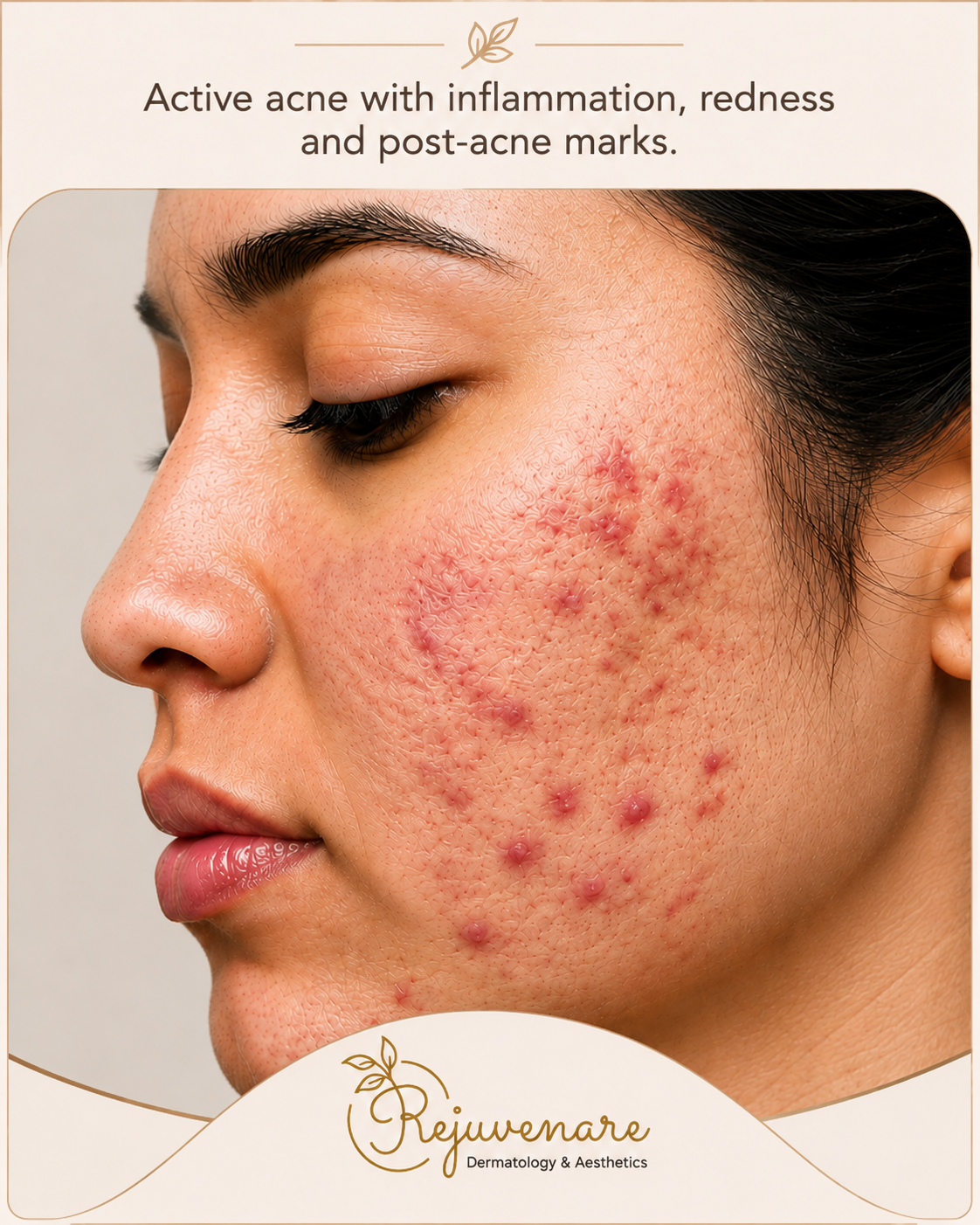
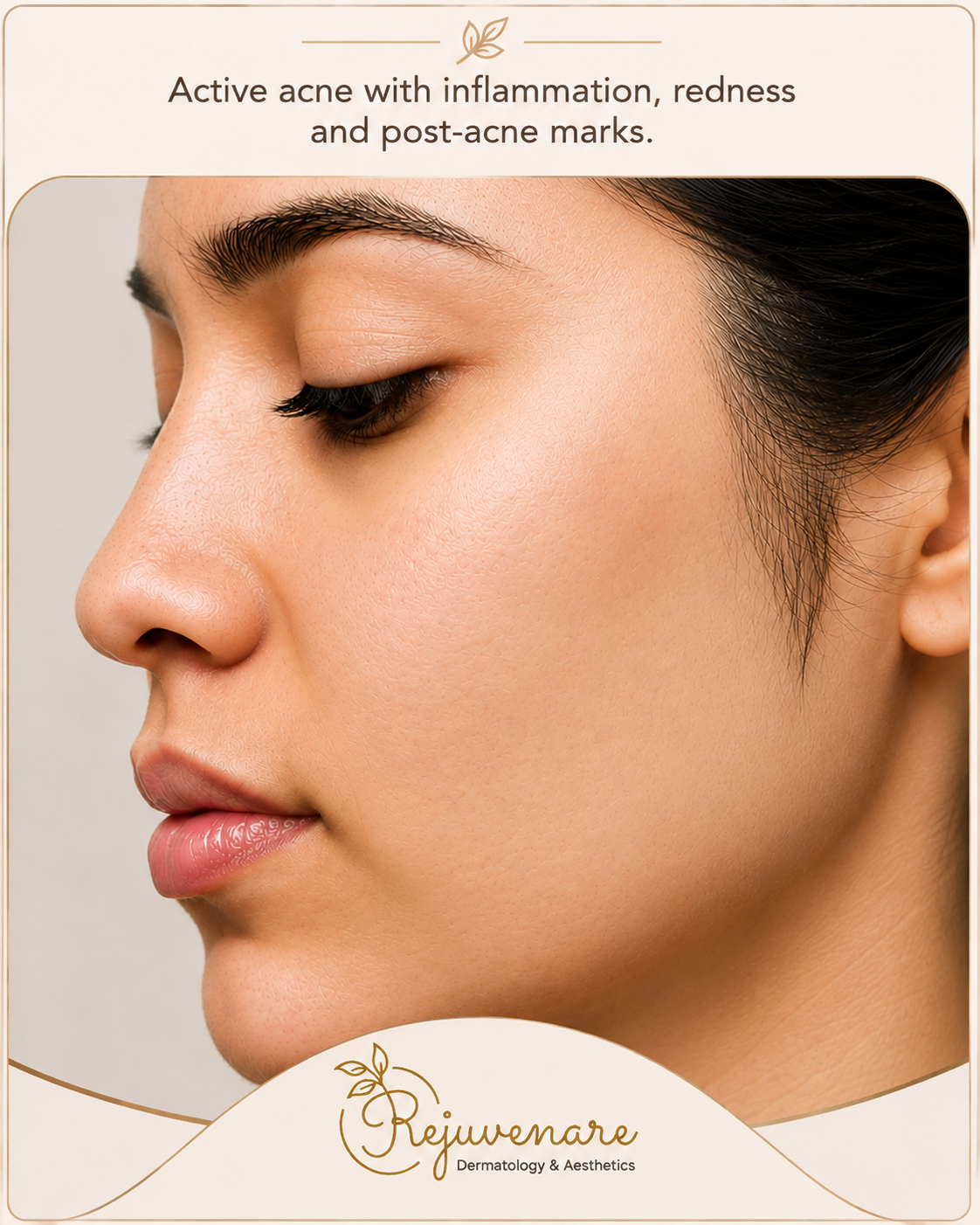
Acne Treatment — Before & After
When Should You See a Dermatologist?
- Acne is painful or deep.
- You are developing scars.
- Acne keeps coming back.
- Over-the-counter products have not helped.
- Acne suddenly becomes severe.
- Acne is affecting your confidence or quality of life.
Acne Treatment at Rejuvenare Dermatology
At Rejuvenare Dermatology, Gurugram, Dr. Shobhita Gupta and the dermatology team provide personalized acne assessment and treatment based on acne type, severity, skin condition, and individual medical factors.
- Sector-87, SilverStreak Multispecialty Hospital, Near Sapphire 90 Mall, Gurugram
- Call or WhatsApp: +91 92540 72619
Start with the full acne guide: Acne: Types, Causes, Treatment & Prevention.
Explore the clinic’s acne service: Acne Treatment at Rejuvenare Dermatology.
